
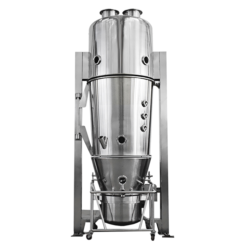

Fluid Bed Dryer (FBD) System
Categories: Granulation Lines, Pharma Field, Processing, Drying Technology
General Description
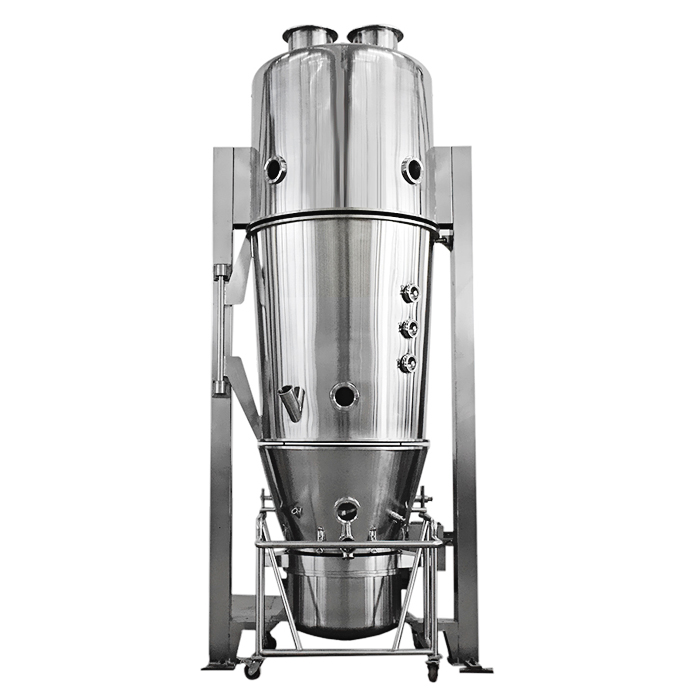
The Fluid Bed Dryer (FBD) System is an advanced drying solution widely used in pharmaceutical, fine chemical, food, and agrochemical industries. It is primarily designed for the efficient and uniform drying of wet granules and powders generated during granulation processes.
In addition to drying, modern FBD systems can perform multiple processing operations, including top-spray granulation, pelletizing, and Wurster coating, making them versatile solutions for various industrial applications.
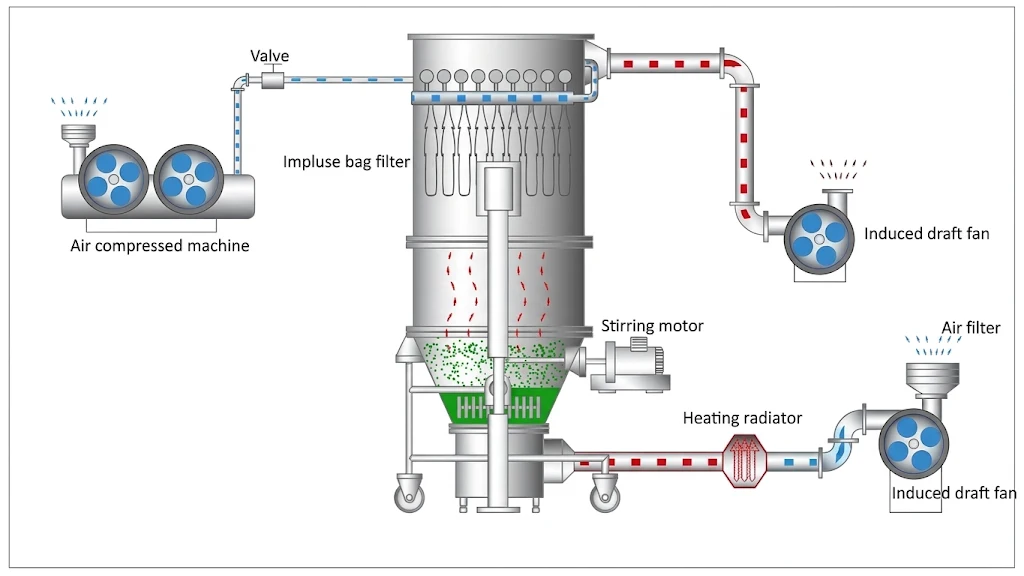
The system operates by passing a controlled stream of heated air upward through a bed of solid particles inside a product container. This process suspends and agitates the particles, creating a fluidized state that maximizes contact between the material and the drying air. As a result, the system achieves rapid heat and mass transfer, uniform moisture reduction, and consistent product quality while minimizing localized overheating.
Key Features & Benefits
- Rapid Drying Performance: Achieves faster drying rates than conventional tray dryers, significantly reducing batch processing time.
- Uniform Product Quality: Continuous particle movement and consistent temperature distribution ensure uniform moisture content throughout the batch.
- Process Flexibility: Handles different particle sizes, bulk densities, granules, and powders.
- Closed-System Operation: Minimizes operator exposure to potent materials and reduces environmental dust contamination.
- Scalability & Automation: Available for laboratory, pilot, and full-scale production, with advanced PLC control systems and optional 21 CFR Part 11-compliant features.
- CIP/WIP Integration: Optional Clean-in-Place (CIP) and Wash-in-Place (WIP) systems support validated cleaning and reduce downtime.
System Components & Principle of Operation
A standard Fluid Bed Dryer consists of several integrated subsystems:
1. Air Handling Unit (AHU)
Conditions the incoming process air to achieve the required temperature and cleanliness.
- Pre-filters and HEPA filters ensure clean, particle-free air for pharmaceutical processing.
- Heating systems use steam, electric, or hot water coils to reach the required inlet temperature.
- Optional dehumidification systems provide precise humidity and dew point control for hygroscopic materials.
2. Drying / Process Chamber
The main vessel where fluidization and drying take place.
- Product Container: Holds the wet material and incorporates a stainless steel mesh screen or sintered plate air distributor.
- Expansion Chamber: Reduces upward air velocity, allowing entrained particles to fall back into the product bed.
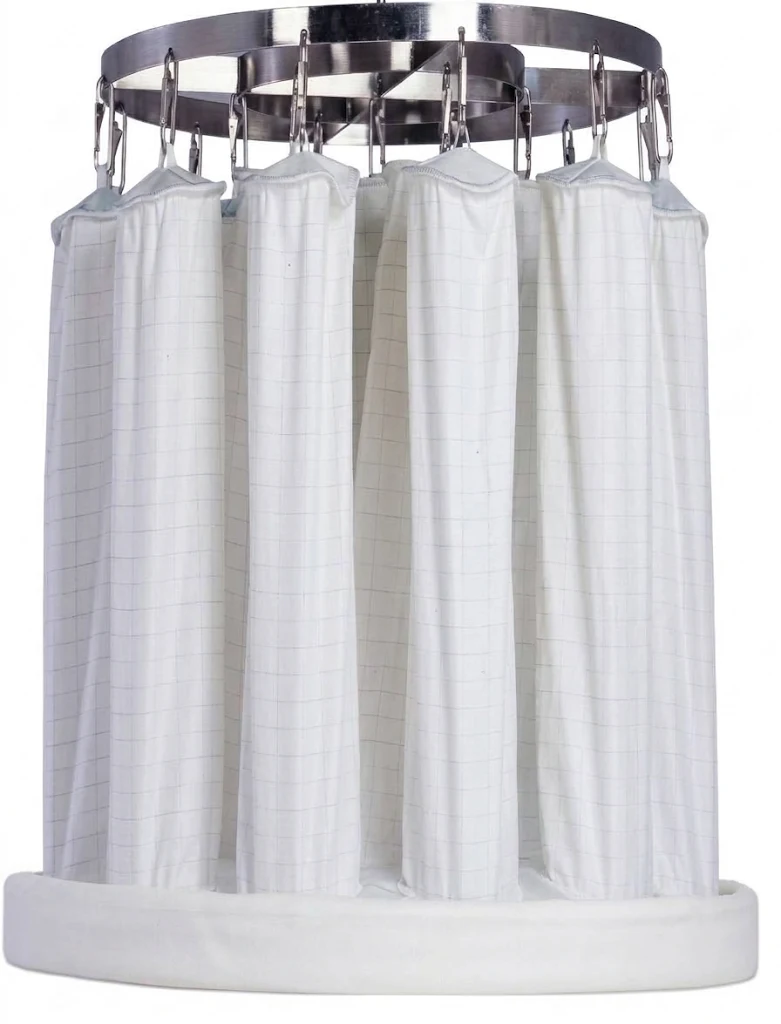
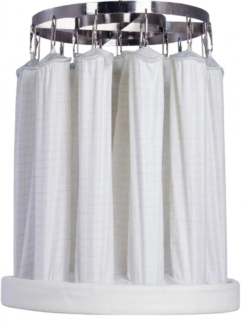
- Filter Bags: Capture fine particles before exhaust air is released. An automated reverse-jet compressed air system periodically cleans the filters.
3. Product Discharge System
Includes a bottom discharge valve or an integrated lifting and tipping mechanism to facilitate efficient and controlled product unloading.
4. Control System
An HMI/PLC-based control system monitors and regulates critical process parameters, including airflow, inlet air temperature, and product temperature, ensuring reproducibility and process control.
Critical Process Parameters (CPPs) & Monitoring
The following parameters are monitored to maintain efficient and consistent drying performance:
- Inlet Air Temperature: Controls the heat supplied to the product and directly influences the drying rate.
- Product (Bed) Temperature: Indicates drying progress and helps determine the drying endpoint.
- Airflow Volume (CFM / m³/h): Maintains proper fluidization and prevents insufficient mixing or excessive particle carryover.
- Exhaust Air Temperature: Supports drying curve monitoring and temperature control.
- Filter Bag Differential Pressure: Monitors filter resistance and triggers cleaning cycles when required.
- Bed Humidity / Moisture Analyzer: Optional inline sensors, such as near-infrared (NIR), provide real-time moisture monitoring.
Technical Specifications
| Feature | Typical Specification |
|---|---|
| Batch Capacity | 10 kg to over 1,500 kg per batch |
| AHU Filtration | EU7 Pre-filter + H13 HEPA Supply |
| Heating Capacity | Inlet temperatures up to 120°C |
| Fan Capacity | VFD controlled, airflow velocity 1–5 m/s |
| Product Contact Material | AISI 316L Stainless Steel, Ra < 0.6 μm |
| Non-Contact Material | AISI 304 Stainless Steel |
| Seals & Gaskets | FDA-approved Silicone, EPDM, or Viton |
| Explosion Safety | Optional 10-bar pressure shock-resistant design, ATEX compliant |
| Instrumentation | Intrinsically safe or explosion-proof sensors |
Specifications may vary depending on the system configuration, production requirements, and application.
Applications
The Fluid Bed Dryer is suitable for a wide range of industrial applications:
- Pharmaceutical Industry: Drying wet granules produced by high-shear mixers and fluidized bed granulators.
- Fine Chemical Industry: Drying specialty chemical powders and intermediate products.
- Food & Nutraceutical Industry: Processing food ingredients, extracts, and heat-sensitive materials.
- Agrochemical Industry: Drying granular pesticide formulations.


